About NIS
The institute seeks to establish
a comprehensive framework for skill development that
integrates training, assessment, certification,
research, and industry collaboration.
The National Institute of Skilling (NIS) was
inaugurated on 24 July 2012 by the President of
India designate, Hon'ble Pranab Mukherjee, with the
vision of strengthening India's workforce through
systematic skill development and vocational
training. The establishment of NIS reflected the
growing need to equip the country's youth and
working population with industry-relevant skills in
response to rapid technological, economic, and
industrial changes.
The primary mission of NIS is to enhance the skill
sets of the workforce across diverse sectors of the
economy. It aims to bridge the gap between the
skills possessed by workers and those demanded by
employers. By promoting quality training, practical
learning, innovation, and competency development,
the institute seeks to improve employability,
productivity, and opportunities for sustainable
livelihoods. Particular emphasis is placed on
developing a workforce capable of adapting to
emerging technologies and changing occupational
requirements.
The objectives of NIS extend beyond conventional
vocational education. The institute seeks to
establish a comprehensive framework for skill
development that integrates training, assessment,
certification, research, and industry collaboration.
It aims to encourage standardized training
methodologies while also responding to the specific
requirements of different sectors and regions.
Another important objective is to promote continuous
learning and upskilling so that workers can remain
competitive throughout their careers.
The master plan provides a structured framework for
the optimum development of the institute. It
outlines the proposed infrastructure, academic and
training facilities, institutional systems,
human-resource requirements, and mechanisms for
collaboration with industries and other
stakeholders. The plan is intended to create an
environment in which theoretical knowledge can be
effectively combined with practical and hands-on
training. Modern facilities and industry-oriented
curricula are expected to strengthen the quality and
relevance of skill development programmes.
A particularly significant component of the NIS
vision is its 20-year strategic roadmap. This
long-term plan provides a phased approach to the
institute's growth and development. It is designed
to guide expansion in terms of infrastructure,
training capacity, academic programmes,
technological integration, research, and
partnerships. The roadmap also recognizes that skill
requirements will continue to evolve and therefore
emphasizes flexibility, innovation, and periodic
review of institutional priorities.
The strategic vision of NIS is closely connected
with the broader national objective of creating a
highly skilled and productive workforce. By
developing capabilities across multiple sectors, the
institute can contribute to employment generation,
entrepreneurship, industrial growth, and economic
development. It can also help improve the
employability of young people by aligning training
programmes with actual market requirements.
Overall, the National Institute of Skilling
represents a long-term institutional approach to
addressing India's skill-development needs. Its
aims, objectives, master plan, and 20-year strategic
roadmap collectively provide a framework for
building a modern, responsive, and sustainable
centre of skill development. Through effective
implementation, industry engagement, quality
training, and continuous innovation, NIS can play an
important role in preparing India's workforce for
emerging opportunities and strengthening the
nation's human-resource potential.
aims
1. Empowerment through
Education: Provide quality skill-based education to enhance
employability.
2. Bridging the Skill Gap: Address the mismatch between
industry requirements and available skills.
3. Promoting Lifelong Learning: Encourage continuous
learning and upskilling to keep pace with technological
advancements.
4. Inclusivity: Ensure skill development opportunities for
all sections of society, including marginalized groups.
5. Industry Collaboration: Foster strong partnerships with
industries to ensure relevant and updated skill training.
Objectives
1. Curriculum Development:
Create and regularly update a comprehensive curriculum that
aligns with industry standards.
2. Training Programmes: Offer a variety of training
programmes across different sectors.
3. Certification: Provide nationally recognized
certifications to validate skills.
4. Infrastructure Development: Develop state-of-the-art
training facilities.
5. Research and Development: Conduct research to identify
emerging skill needs.
6. Employment Linkages: Establish connections with employers
for job placements.
7. Faculty Development: Train and retain highly qualified
instructors.
8. Technology Integration: Incorporate the latest technology
in training methodologies.
9. Quality Assurance: Implement robust systems for
monitoring and evaluating training quality.
10. Outreach Programmes: Conduct awareness and outreach
programmes to attract participants.
Events
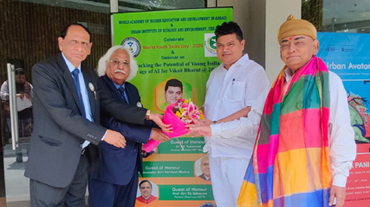
2026: 15 July 2026-World Youth Skills Day Celebration
World Youth Skills Day 2026 was being celebrated at the India International Centre, New Delhi with the theme "Unlocking the Potential of Young India in the Age of AI for Viksit Bharat@2047". View Photos
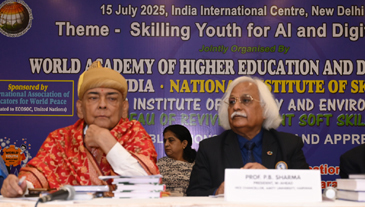
2025: 15 July 2025-World Youth Skills Day Celebration
World Youth Skills Day 2025 was being celebrated at the India International Centre, New Delhi with the theme Skilling Youth for AI and Digital Skills and the Seminar On: Unlocking the Potential of Technical Education for Skilling, Research and Innovation for Viksit Bharat @2047. View Photos
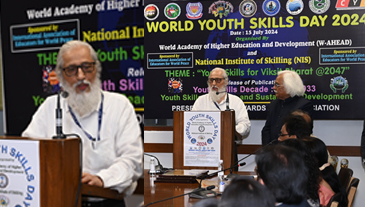
2024: 15 July 2024-World Youth Skills Day Celebration
World Youth Skills Day 2024 was being celebrated at the India International Centre, New Delhi with the theme "Youth Skills for Viksit Bharat@2027", sponsored by International Assocition of Educators for World Peace (An Affiliate of United Nations ECOSOC) jointly organised by World Academy of Higher Education and Development and National Institute of Skilling. View Photos