aims and objectives!
The National Institute of Skilling (NIS) was inaugurated on 24th July 2012 by the President of India designate Hon'ble Pranab Mukherjee with the mission of enhancing the skill set of the workforce in various sectors across the nation. This website provides a detailed overview of the aims, objectives, master plan, and a 20-year strategic roadmap to ensure the institute's optimum development and impact.
Aims
1. Empowerment through Education: Provide quality skill-based
education to enhance employability.
2. Bridging the Skill Gap: Address the mismatch between industry
requirements and available skills.
3. Promoting Lifelong Learning: Encourage continuous learning and
upskilling to keep pace with technological advancements.
4. Inclusivity: Ensure skill development opportunities for all
sections of society, including marginalized groups.
5. Industry Collaboration: Foster strong partnerships with
industries to ensure relevant and updated skill training.
Objectives
1. Curriculum Development: Create and regularly update a
comprehensive curriculum that aligns with industry standards.
2. Training Programmes: Offer a variety of training programmes
across different sectors.
3. Certification: Provide nationally recognized certifications to
validate skills.
4. Infrastructure Development: Develop state-of-the-art training
facilities.
5. Research and Development: Conduct research to identify emerging
skill needs.
6. Employment Linkages: Establish connections with employers for job
placements.
7. Faculty Development: Train and retain highly qualified
instructors.
8. Technology Integration: Incorporate the latest technology in
training methodologies.
9. Quality Assurance: Implement robust systems for monitoring and
evaluating training quality.
10. Outreach Programmes: Conduct awareness and outreach programmes
to attract participants.
Master Plan
1. Infrastructure Expansion:
o Establish Training Centers in all major cities by 2030..
o Develop Regional Centers in Rural Areas by 2030.
o Construct specialized facilities for high-demand sectors.
2. Programme Diversification:
o Introduce new programmes in emerging fields such as AI, IoT, and
renewable energy.
o Expand existing programmes to cover more industry verticals.
3. Faculty and Staff Development:
o Regular training and upskilling for Faculty.
o Recruit industry experts as Guest Lecturers.
4. Industry Partnerships:
o Formalize partnerships with leading Companies for internships and
placements.
o Collaborate with International Organizations for knowledge
exchange.
5. Technological Advancements:
o Implement e-learning platforms for remote skill training.
o Use simulation and virtual reality for hands-on training
experiences.
6. Research and Innovation:
o Establish a dedicated R&D wing for skill gap analysis and
curriculum development.
o Partner with academic institutions for collaborative research
projects.
100-Point Strategy
The 100-Point Strategy focuses on sustainable development, innovation, education, and community engagement to foster long-term societal growth
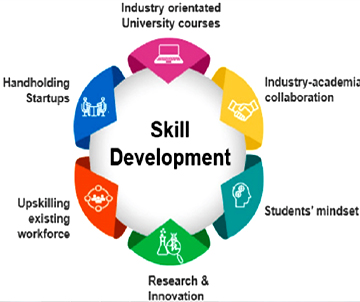
Youth Skills Decade
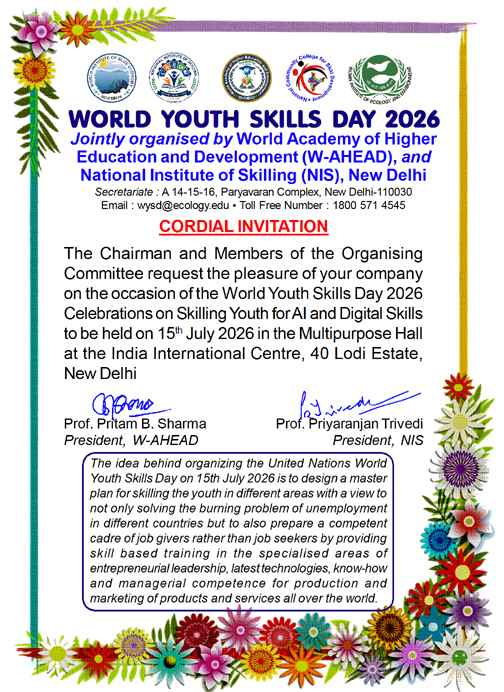
The Youth Skills Decade, spanning from 2024 to 2033, is an initiative aimed at equipping the global youth population
sub-themes
Education lies at the heart of the Youth Skills Decade, serving as the cornerstone for youth empowerment and sustainable development
.
Sub-themes
Skill development is a powerful tool for promoting social inclusion and reducing inequality.
By providing equal access to education and training opportunities, societies can help marginalized and disadvantaged youth overcome barriers to employment and social participation. By focusing on education reform, vocational training, digital literacy, entrepreneurial empowerment, inclusivity, and global collaboration, the Youth Skills Decade aims to prepare youth to address current challenges and capitalize on future opportunities
read moreThe Youth Skills Decade, spanning from 2024 to 2033, represents a pivotal period in global efforts to empower young people with the skills, knowledge, and opportunities necessary to navigate and shape the future.
As we embark on this transformative journey, it is crucial to examine the implications of the Youth Skills Decade across various dimensions of youth development and its impact on sustainable global progress.